Home/Knee Replacement Surgeon in Mira Road
Knee Replacement Surgeon in Mira Road, Mumbai
Dr. Avinash A. Kachare is a knee replacement surgeon in Mira Road, Mumbai, who trained in robotic joint replacement at Queen Mary Hospital, Hong Kong, and operates at Wockhardt Hospitals, Mira Road. A knee replacement is an excellent operation for the right knee at the right time — and the wrong answer for a knee that is not ready. This page covers how to tell which you are, which version of the operation suits which problem, how to judge a surgeon, and what the whole process actually involves.
Before Anything Else
Do You Actually Need a Knee Replacement?
This is the first question, and it is the one most often skipped. A knee replacement is an excellent operation for the right knee at the right time. Performed too early, it commits a patient to a mechanical joint decades before it was necessary — and to a probable revision later in life. Performed too late, it means years of avoidable pain and a stiffer, weaker leg going into surgery, which makes rehabilitation harder.
Signs that replacement is genuinely being considered
- — Pain that persists at rest or wakes you at night, not only pain on walking
- — Walking distance reduced to the point that it dictates your day
- — Difficulty with stairs, or getting up from a chair or the floor without pushing on your hands
- — Visible bowing of the leg, or a knee that has stopped straightening fully
- — X-rays showing bone-on-bone contact with loss of the joint space
- — Analgesics, physiotherapy, weight management and injections tried properly and no longer holding
Reasons to wait
If the joint space is preserved on X-ray, if the pain is coming from the kneecap or a meniscal tear rather than generalised arthritis, if physiotherapy has never been done properly, or if the pain is actually referred from the hip or the lower spine — then a replacement is not the answer, and there are better options. A meaningful proportion of patients who arrive convinced they need a replacement do not yet need one. Being told so is not bad service; it is the point of the consultation.
The Options
Which Operation, and Why It Matters
“Knee replacement” describes several different operations. Being offered the right one matters as much as the technique used to deliver it.
Total knee replacement
All three compartments are resurfaced. The standard operation for widespread arthritis, with decades of registry data behind it and reliable, well-understood outcomes.
Partial (unicompartmental) knee
Only the damaged compartment is resurfaced, preserving healthy bone and both cruciate ligaments. Recovery is faster and the knee often feels more natural — but it is only appropriate where the arthritis is genuinely confined to one compartment and the ligaments are intact. Positioning is less forgiving, which is where robotic planning helps most.
Both knees in one admission
One anaesthetic, one hospital stay, one recovery. Costs less than two separate admissions, but places more stress on the body at once and demands a harder early rehabilitation. Suitable for medically fit patients with severe arthritis on both sides; generally avoided where there is significant cardiac, respiratory or kidney disease.
Revision knee replacement
Replacing an implant that has loosened, worn, become infected or was never right. Technically more demanding than the first operation: bone stock is reduced, anatomy is distorted, and specialised implants and sometimes 3D-printed patient-specific components are required.
Choosing
How to Judge a Knee Replacement Surgeon
Most patients choose a surgeon on a recommendation, a hospital name, or whoever appears first in a search. Those are weak signals. Here is what actually predicts a good result, and what you are entitled to ask in the consultation.
Questions worth asking any surgeon
- — What is your specific training in joint replacement? An MS in Orthopedics is a general qualification. Dedicated arthroplasty fellowship training is a different level of preparation.
- — Why this operation for my knee? A good answer references your X-ray, your deformity and your activity level — not a general case for surgery.
- — What are the alternatives, and why have you ruled them out?
- — Which implant, and why that one for me?
- — What could go wrong, and how often does it? Infection, stiffness, clots and persistent pain are real. A surgeon who does not raise them is managing you rather than informing you.
- — Who performs my follow-up and physiotherapy, and where?
- — What is the all-inclusive cost, in writing?
Dr. Avinash A. Kachare — the record
MBBS and MS Orthopedics from LTMMC & GH (Sion Hospital), one of Asia's largest trauma centres. Three international fellowships: robotic joint replacement and 3D printing at Queen Mary Hospital, University of Hong Kong; arthroscopy and sports surgery in Hungary; and trauma with 3D printing. Three PubMed-indexed publications, including work on 3D-printed mesh implants for bone gap management in weight-bearing bone and on patellar fracture fixation.
Consultation, assessment and follow-up take place at Surgicare Plus, Mira Road East. Surgery is performed at the associated hospitals in the area, including Wockhardt Hospital and Gurukripa Hospital, which hold the theatre infrastructure and robotic systems that joint replacement requires.

Surgicare Plus — Mira Road
Shop No. 40-41, Poonam Cluster 2
Mira Road East, Mira Bhayandar
Maharashtra 401107
Phone / WhatsApp: +91 94219 91530
Monday to Saturday
10:00 AM – 8:00 PM
Sunday — by appointment
Appointments are preferred, especially if you are travelling in from Vasai, Virar or Thane, or have difficulty standing for long.
The Process
What Actually Happens, Start to Finish
Before surgery
Assessment with standing X-rays — standing matters, because arthritis is a weight-bearing problem and a knee filmed lying down understates it. Blood tests, cardiac and anaesthetic fitness review, and a dental check where indicated, since untreated dental infection is a recognised source of implant infection. If robotic surgery is planned, a CT scan of the leg is used to build the three-dimensional plan. Insurance pre-authorisation should be started at least a week ahead.
In hospital
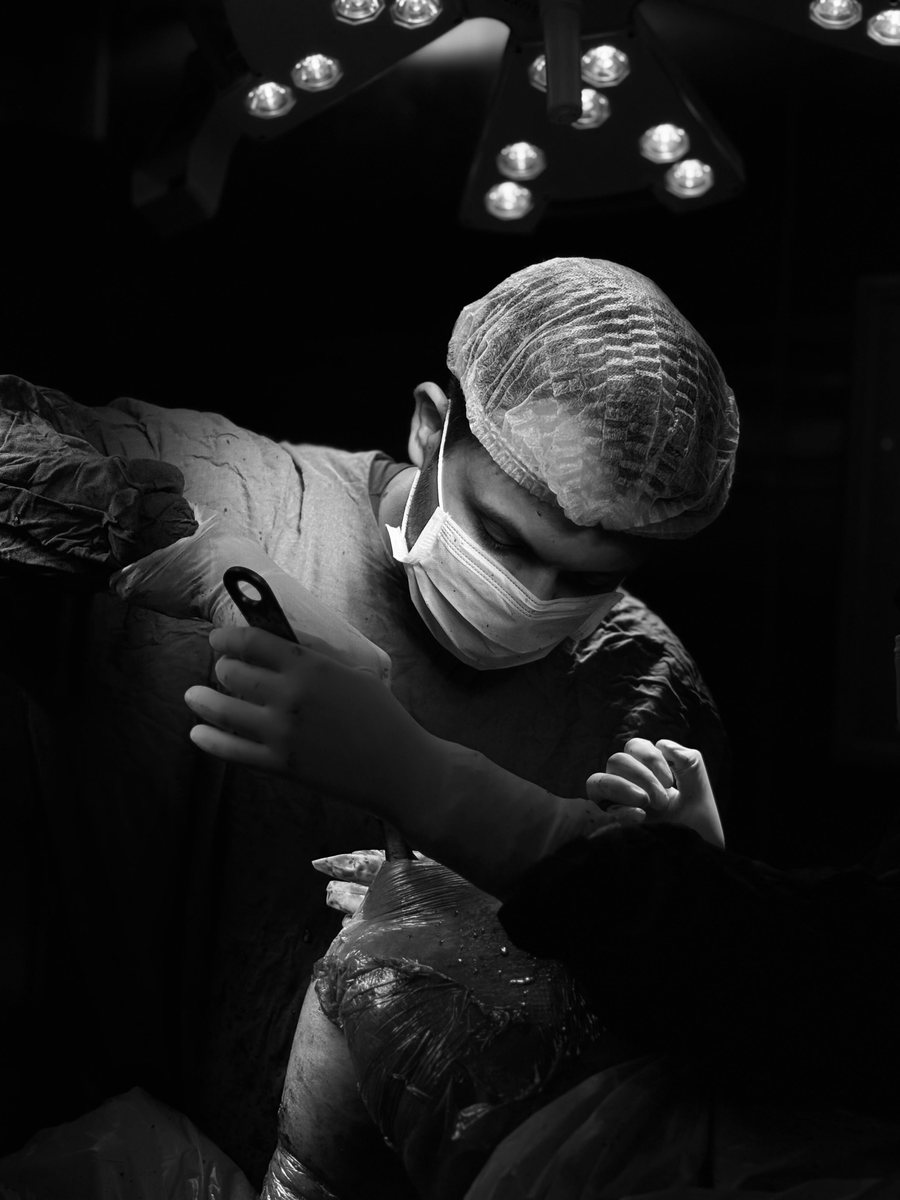
Surgery usually takes one to two hours per knee. Most patients have spinal anaesthesia rather than general, which suits recovery well. Standing and taking a few supported steps happens on the day of surgery or the day after — early movement protects against stiffness and clots and is not optional. Typical stay is three to five days.
After discharge
Walking aids for roughly two to six weeks. Physiotherapy is the part patients underestimate and the part that most decides the result: the surgery creates the opportunity, rehabilitation realises it. Most people are managing normal daily activities by six to twelve weeks, and the knee continues improving for a full year. The week-by-week timeline sets out each stage.
For costs, insurance and what packages exclude, see the Mira Road cost breakdown. For technique, see robotic knee replacement and the robotic versus conventional comparison.
Training
The Unit Behind the Technique

Dr. Avinash A. Kachare’s joint replacement fellowship was at Queen Mary Hospital, Hong Kong, across more than 200 robotic-assisted and conventional joint replacements. Technique is learned in theatre; judgement is learned on ward rounds. A fellowship in a high-volume unit means seeing hundreds of knees at every stage — the ones that went well, and more usefully the ones that did not.
Before You Decide
Knee Replacement — Frequently Asked
Bring your X-rays for a straight answer
WhatsApp Us