Home/International Patients
Knee & Hip Replacement in Mumbai for International Patients
If you are considering travelling to India for a joint replacement, the question that matters is not what it costs — it is who will operate, and who looks after you afterwards. This page answers both, along with cost in US dollars, how long you will be away, and how the medical visa works.
Personal reply from Dr. Kachare within 24 hours (IST). Free for international patients: X-ray review and first video consultation, with no obligation. You deal with him personally, start to finish. Prefer email? theprotonium@protonmail.com
Rated 5.0 out of 5 across 136 verified Google reviews · Surgery at Wockhardt Hospital, Mira Road (JCI and NABH accredited) and Apollo Spectra Hospitals (accredited)
Before You Travel
Coming to Mumbai for a Joint Replacement
Patients travel to India for knee and hip replacement for one reason above all others: the same implant, from the same manufacturers used in London or Dubai, fitted by a surgeon trained to the same standard, at a fraction of the price at home. That much is true and well known.
What is harder to find out from abroad is the part that actually matters — who is going to operate on you, whether you can speak to them before you fly, and who answers the phone when you are back home and something does not feel right.
This page is written to answer those questions directly. Most patients reaching it are travelling from Kenya, Nigeria, Tanzania, Oman, Yemen, Somalia and the Maldives, where Mumbai is a short and well-connected flight.
You are probably in one of three situations
- Arthritis that has run out of options. Injections and physiotherapy have stopped helping, and joint replacement is available at home but costs more than you can raise or carries a waiting list measured in years.
- A previous replacement that has failed. Pain that came back, a joint that loosened, or an infection. Revision surgery needs more experience than the first operation, and fewer surgeons do it well.
- Bone loss or a fracture that never healed. The hardest group, and the one where the gap between hospitals is widest.
The Surgeon
Who Would Be Operating
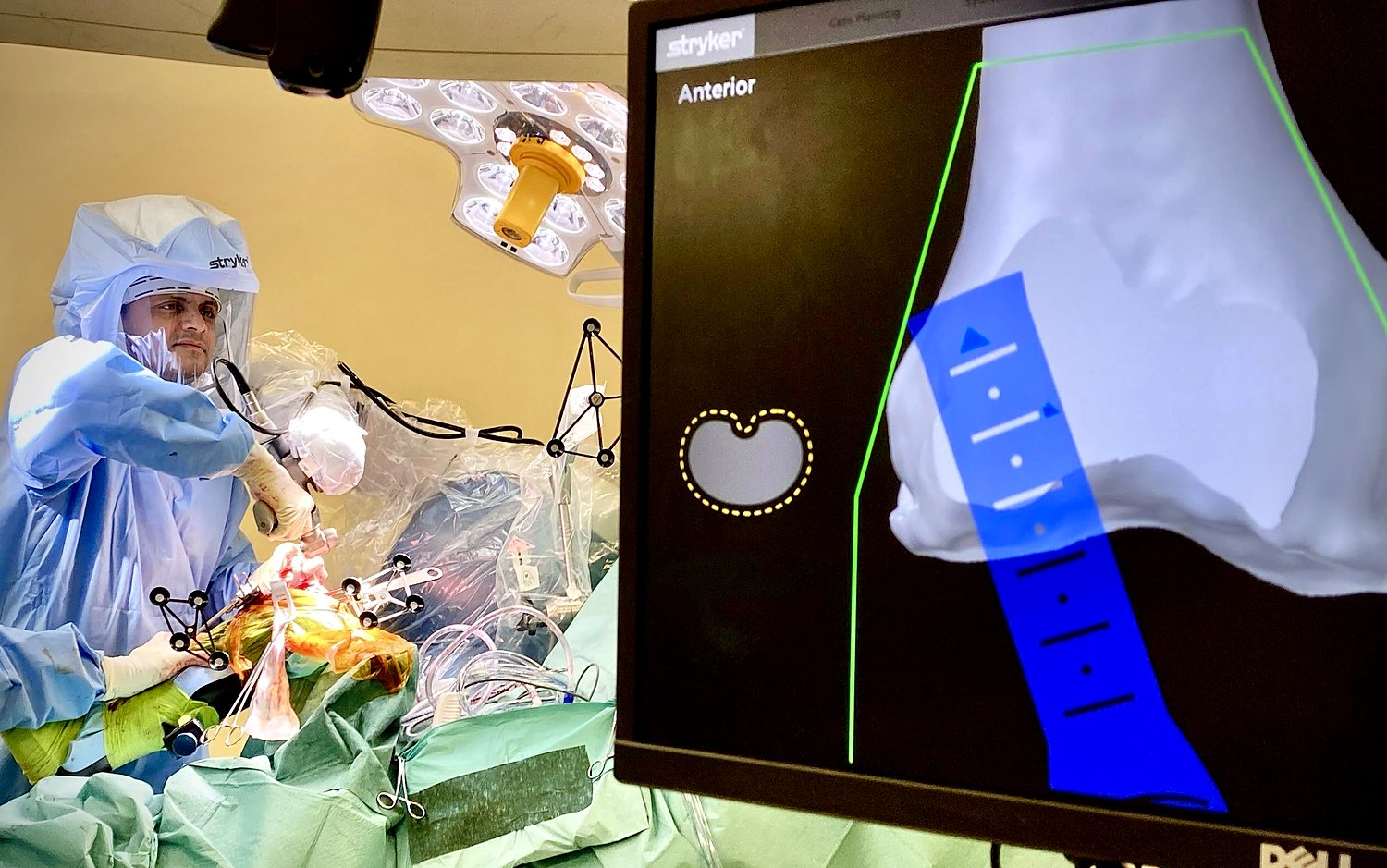
Dr. Avinash A. Kachare is an orthopedic and joint replacement surgeon in Mumbai. MBBS and MS Orthopedics from LTMMC and Sion Hospital — one of Asia’s largest trauma centres — followed by three international fellowships:
- Robotic Joint Replacement — Queen Mary Hospital, Hong Kong
- Advanced Arthroscopy and Sports Surgery — St. George University Teaching Hospital, Hungary
- Trauma and 3D Printing — Queen Mary Hospital, Hong Kong
Over 4,000 joint replacement and trauma procedures. Three PubMed-indexed publications. He has trained more than fifty clinicians in 3D printing for orthopedics.
The Hospital
Where the Surgery Happens
Dr. Kachare operates at two accredited Mumbai hospitals with international patient departments: Wockhardt Hospital, Mira Road, which is JCI and NABH accredited, and Apollo Spectra Hospitals, which is also accredited.
You deal with Dr. Kachare personally, start to finish — the assessment, the video consultation, the plan and the operation are his. Once you have decided to go ahead with him, he arranges the practical side through the hospital, whose international office handles the logistics that decide whether your trip happens at all:
- The invitation letter you need to apply for an Indian medical visa
- Paperwork for a medical attendant visa so a family member can travel with you
- FRRO registration after you arrive, where your visa type requires it — see the visa guide
- A written package quote before you fly, rather than a bill that grows after surgery
- Airport transfer, accommodation near the hospital, and interpreter support
Consultations and follow-up outside the hospital admission take place at Surgicare Plus, Mira Road East.
Trained and practising across leading Indian and international orthopedic networks








Cost
What It Costs, Broken Down Honestly
Indian hospitals quote a surgical package, and the single most important thing to understand is that the implant is not included in it. This causes more disputes than anything else in medical travel: a patient budgets from the quoted figure, then meets a second bill at discharge.
Below is the actual structure, so you can check any quote you are given — from this hospital or any other.
| Procedure | Nights | Hospital package | Implant | Indicative total |
|---|---|---|---|---|
| Total knee replacement — one knee | 5 | ₹2.3L – ₹2.8L | ₹1L – ₹2L | $3,400 – $5,000 |
| Total knee replacement — both knees | 7 | ₹3.1L – ₹3.7L | ₹2L – ₹4L | $5,300 – $8,000 |
| Total hip replacement — one hip | 5 | ₹2.3L – ₹2.8L | ₹1L – ₹2L | $3,400 – $5,000 |
| Revision or complex reconstruction | Varies | Quoted case by case once imaging has been reviewed | ||
What moves the number
- Room category. A shared room and a suite differ by more than a lakh on the same operation. You are choosing comfort, not surgical quality — the operating theatre and the surgeon are identical.
- The implant chosen. A standard system and a high-flexion or ceramic bearing are a lakh apart. Which is right depends on your age, bone quality and activity level, not on your budget.
- Your own health. Diabetes, cardiac history or obesity mean more workup before surgery and sometimes a longer stay.
- Length of stay. Packages cover a fixed number of nights. Beyond that, each day is billed separately.
What no package covers
- Flights, for you and anyone travelling with you
- Visa fees
- Accommodation before admission and for roughly two weeks after discharge
- Physiotherapy once you have left the hospital
- Treatment of complications, which are uncommon but sit outside every package
Why the implant is not where India is cheaper
Implant prices in India are capped by the National Pharmaceutical Pricing Authority, and the systems used here — Zimmer Biomet Persona and DePuy Synthes — are the same ones used in London, Dubai and New York. The saving in travelling to India is in hospital and staffing costs, not in the metal going into your leg. Be wary of any quote that implies otherwise.
Cost pages in more detail: knee replacement, both knees, hip replacement and robotic knee replacement.
Your Stay
How Long You Will Be in India
The most common question, and the one most sites avoid. For a single knee or hip replacement, plan on two and a half to three weeks in Mumbai.
| Stage | Time | What happens |
|---|---|---|
| Arrival to surgery | 2 – 4 days | Consultation, blood work, cardiac and anaesthetic clearance, FRRO registration |
| Hospital admission | 3 – 5 days | Surgery, and walking with support usually within 24 hours |
| Recovery nearby | 10 – 14 days | Daily physiotherapy, wound check, stitches out |
| Fitness-to-fly review | 1 day | Final review before a long flight |
Both knees done together adds roughly a week. Revision surgery adds more, and how much depends on what is found.
Do not book a return flight before the surgery date is confirmed. Recovery is not entirely predictable, and a non-refundable ticket is a bad reason to fly before a surgeon is happy for you to.
Afterwards
Who Looks After You When You Get Home
This is the real fear behind medical travel, and it is rarely addressed honestly. You have surgery six thousand kilometres from home, you fly back, and then what?
- You leave with your complete file — operative notes, implant make, model and batch numbers, discharge summary and post-operative imaging. Any orthopedic surgeon anywhere can take over care with that in hand. Ask for it; do not assume it will be handed over.
- Video follow-up at six weeks, three months and one year, with Dr. Kachare directly.
- A physiotherapy protocol in writing that a therapist in your own city can follow without needing to contact anyone here.
- WhatsApp access if something changes — a wound that looks wrong, swelling that returns, a fall.
Complex Cases
Failed Surgery, Bone Loss and Non-Union
If you have already had surgery that did not work, you are in the group most worth travelling for — because the difference between an average and an excellent surgeon is widest here.
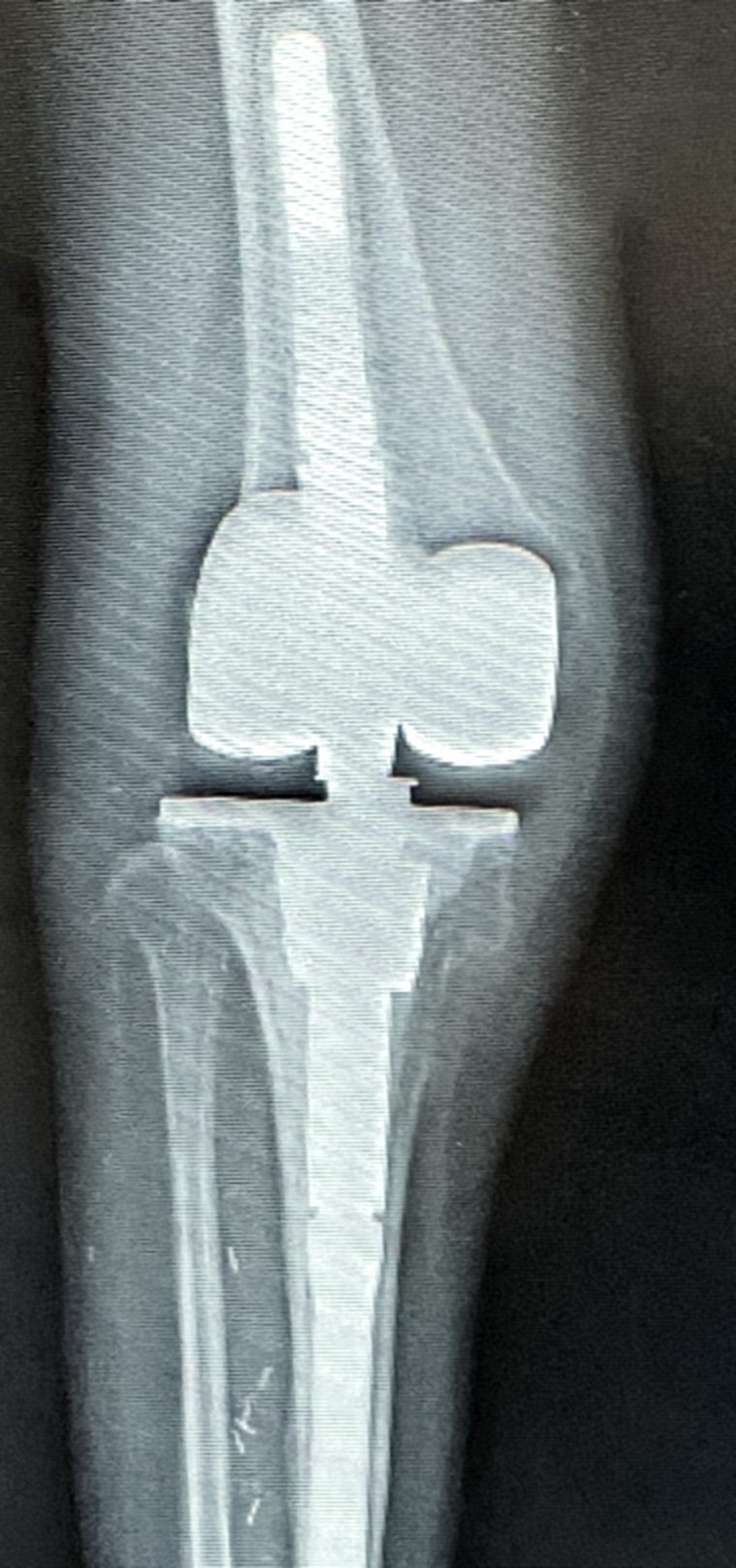
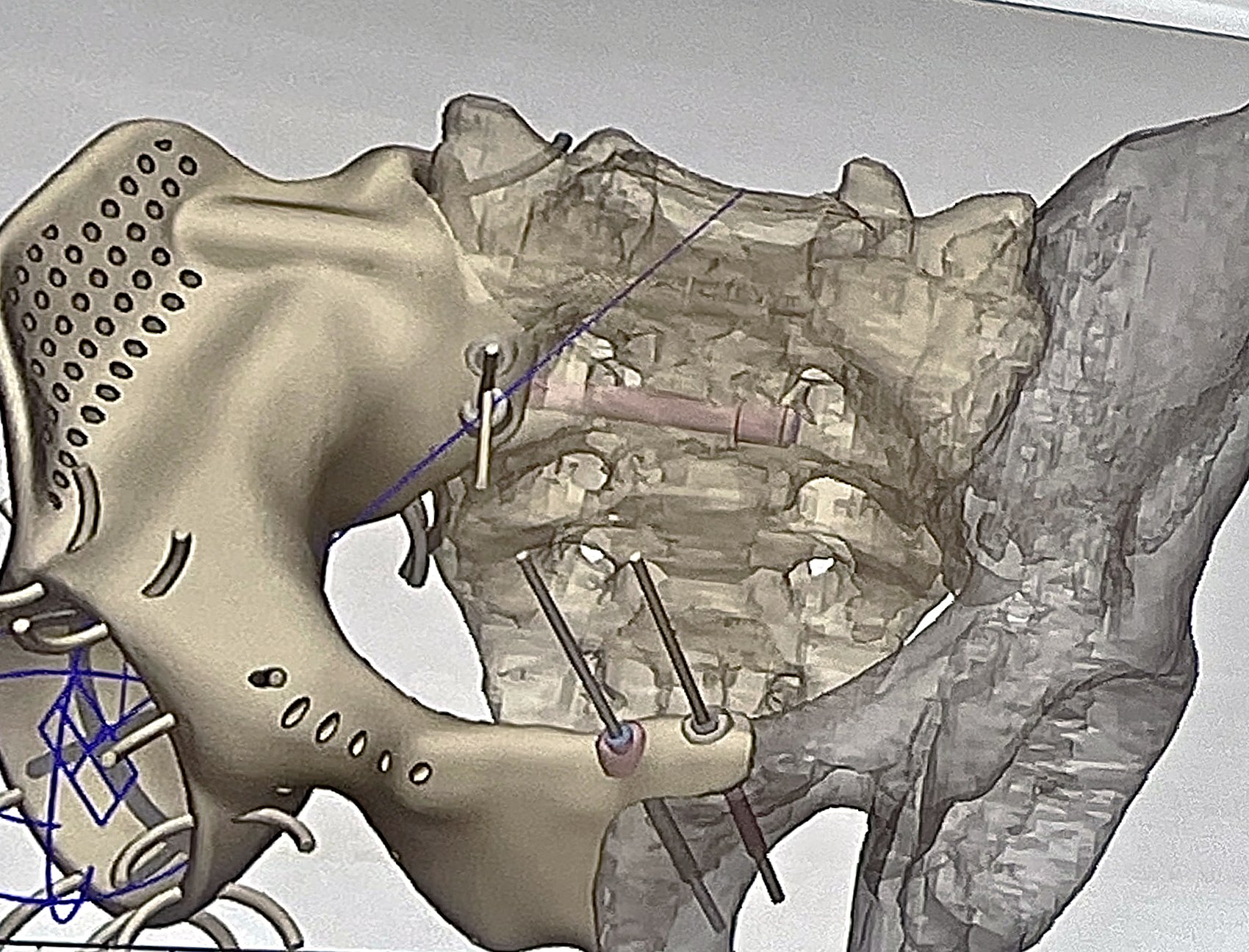
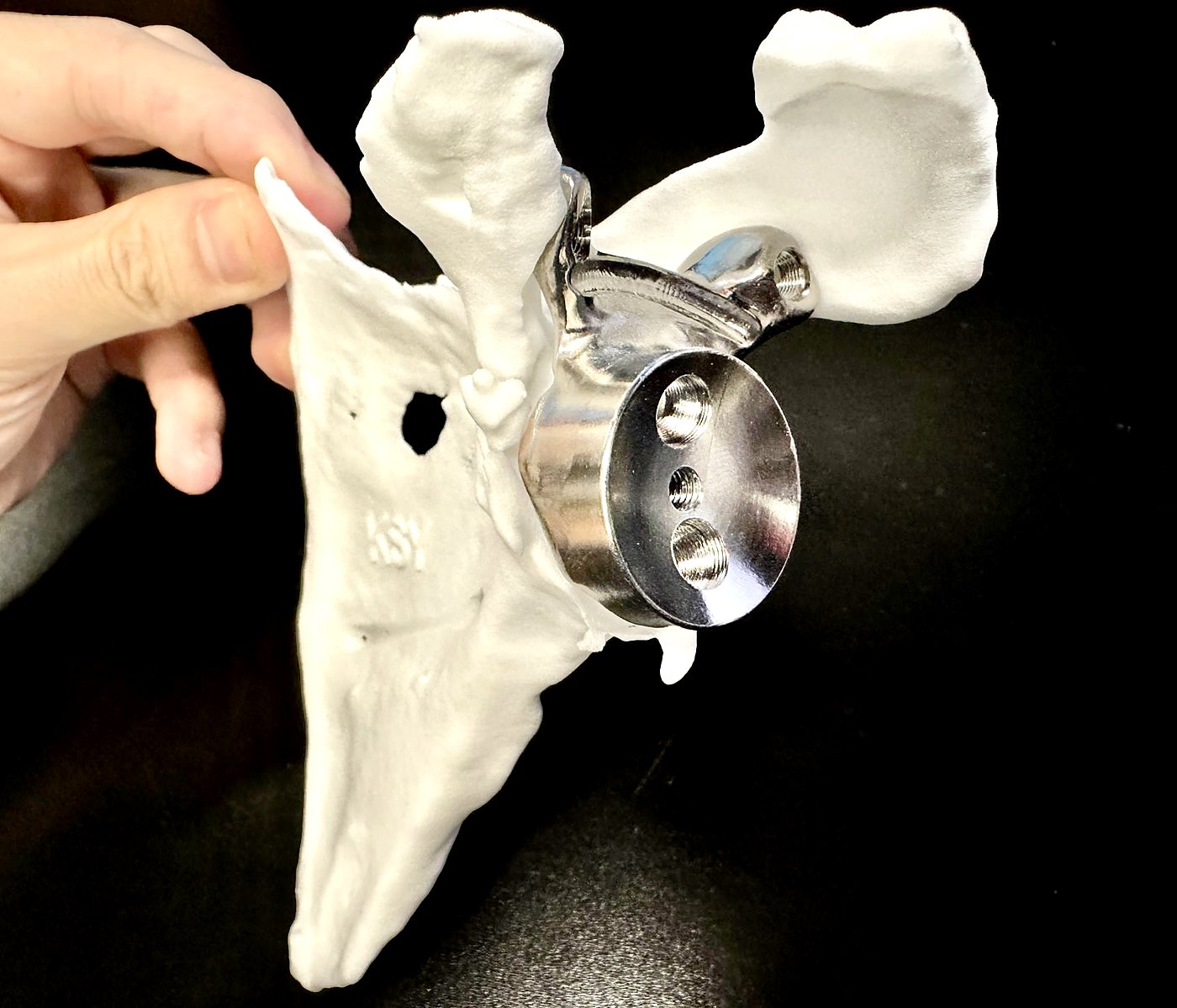
Dr. Kachare uses patient-specific 3D-printed titanium implants for bone loss that has no off-the-shelf answer. The implant is designed from your own CT scan, mirroring your uninjured side, and printed to fill exactly the gap you have. A tibial bone-gap reconstruction done this way is published in the Journal of Orthopaedic Case Reports — the patient was fully weight-bearing at three months with no bone graft taken, and CT confirmed bone growing into the implant at eighteen months.
Planned with engineers, before anyone operates
Where bone loss is severe, the implant is designed rather than selected. Working with design engineers, the remaining bone is reconstructed from your own CT, the implant is built to fit it, and the screw trajectories are planned into whatever solid bone is left — all before the operating theatre is booked. The result is checked on a printed model of your own anatomy.
Read the published case and how these implants are made →
If a fracture of yours has not healed, or a previous replacement has loosened, send the imaging. This is assessable from abroad before you spend anything on a flight.
By Country
Where Patients Travel From
The journey, the visa route and the follow-up once you are home differ enough by country that each has its own page. Flight times from Muscat, Malé and Dubai are around three hours; Nairobi and Dar es Salaam are a direct six or so; Lagos is a one-stop journey of thirteen or more.
- Kenya — direct from Nairobi, about six and a quarter hours
- Nigeria — one stop from Lagos, usually via Addis Ababa
- Oman — direct from Muscat, under three hours
- the Maldives — direct from Malé, under three hours
- Tanzania — direct from Dar es Salaam, about six hours
- Uganda — direct from Entebbe on some days of the week, otherwise one stop
- the UAE — direct from Dubai, Abu Dhabi and Sharjah, around three hours
- Iraq — direct from Baghdad on some days, and a regular (paper) medical visa
- the United Kingdom — direct from London, for patients facing a long NHS wait
Further pages cover the parts everyone asks about:
- The free X-ray review and video consultation — how sending your X-rays, the video consultation and the written estimate work
- The Indian medical visa — which visa, the hospital invitation letter, attendant visas, and registration after you land
- Why Mumbai, and whether you should travel at all — the honest case, including the risks medical travel marketing leaves out
Getting Started
How to Begin Without Committing to Anything
Free for international patients: X-ray review and first video consultation, with no obligation. Neither requires you to travel, and you deal with Dr. Kachare personally from the first message.
- Send your imaging on WhatsApp or by email. X-rays are usually enough for arthritis; a CT is better for bone loss or failed surgery. Photograph the films against a window if you only have hard copies — it works.
- Add a short history. Your age, how long the pain has lasted, what has already been tried, any previous surgery, and other conditions such as diabetes or heart disease.
- You get a personal reply from Dr. Kachare within 24 hours (IST) — whether replacement is the right answer, which approach, and an honest view of what to expect.
- A free first video consultation with him, with no obligation, before any decision about surgery, so you can see the surgeon and ask everything you need to.
- If it makes sense to proceed, Dr. Kachare arranges your written estimate and the visa invitation letter, which the hospital issues.
How the free X-ray review and video consultation work, step by step →
International Patients
Travelling for Surgery — Frequently Asked
You need a medical visa. Treatment on a tourist visa is not permitted, and hospitals will ask to see the correct visa at admission. The medical visa requires an invitation letter from the treating hospital, which is issued once Dr. Kachare has reviewed your case and you have decided to proceed. Up to two family members can usually accompany you on medical attendant visas. After arriving you must register with the FRRO — the hospital will help with this, but it is a legal requirement, not an optional step.
Allow four to six weeks from first contact to surgery. Imaging review takes a few days, the quote and invitation letter a few more, and visa processing time varies by country. Surgery itself can usually be scheduled within days of your arrival. Urgent cases can move faster; planned arthritis surgery rarely needs to.
Yes. Dr. Kachare uses Zimmer Biomet (Persona), DePuy Synthes and Stryker systems, and operates with both the MAKO (Stryker) and MISSO robotic-arm systems where robotic surgery is indicated — the same implant brands used in the United States, United Kingdom and Gulf. India manufactures a great deal of medical equipment, but the implant going into your knee is not a local substitute. Ask for the make, model and batch number in your discharge papers; you are entitled to them.
Mostly staff costs, hospital overheads and the absence of an insurance billing layer — not cheaper implants or shortcuts in the operating theatre. The same titanium implant costs roughly the same wherever it is bought. What differs is everything around it. Be suspicious of any quote far below the ranges on this page; it usually means a different implant or a package that excludes something you will be billed for later.
Yes, after about two to three weeks, with a fitness-to-fly review first. Long flights carry a raised risk of clots after lower limb surgery, so you will be on blood thinners, advised to wear compression stockings, and told to walk the cabin regularly. Book an aisle seat, and extra legroom if you can afford it — it is the one upgrade genuinely worth paying for here.
Sometimes, and it depends entirely on your policy and country. Some insurers reimburse overseas treatment, particularly where the procedure is unavailable or has a long wait locally. Ask your insurer before you travel and get the answer in writing — the hospital can provide itemised invoices and medical reports in the format insurers usually want, but only if you ask in advance.
You are treated at the same hospital, and the surgeon who operated manages it. This is one genuine advantage of the stay being two to three weeks rather than a few days — the period when most early problems appear is spent where the surgical team can see you. Ask what a complication would cost before you travel, because it is generally outside the package price.
Very possibly, and this is the group where travelling makes the most sense. Revision surgery is harder than a first replacement and fewer surgeons do it regularly. Where bone has been lost, a 3D-printed patient-specific implant can solve problems that standard revision components cannot. Send the imaging and the operative notes from your first surgery if you have them — it can be assessed before you spend anything.
Chhatrapati Shivaji Maharaj International Airport (BOM) in Mumbai. There are direct connections from Nairobi, Lagos, Muscat, Dubai, Malé and Dar es Salaam among others. Airport transfer can be arranged with your admission — confirm it is included in your written estimate rather than assuming.
Send your X-ray or CT on WhatsApp for an assessment from the surgeon
Personal reply from Dr. Kachare within 24 hours (IST). Free for international patients: X-ray review and first video consultation, with no obligation. You deal with the surgeon personally, start to finish. Email: theprotonium@protonmail.com · How the free X-ray review works →